
Diese Seite wurde noch nicht übersetzt; ihr Inhalt wird daher auf Englisch angezeigt.
01
Überblick
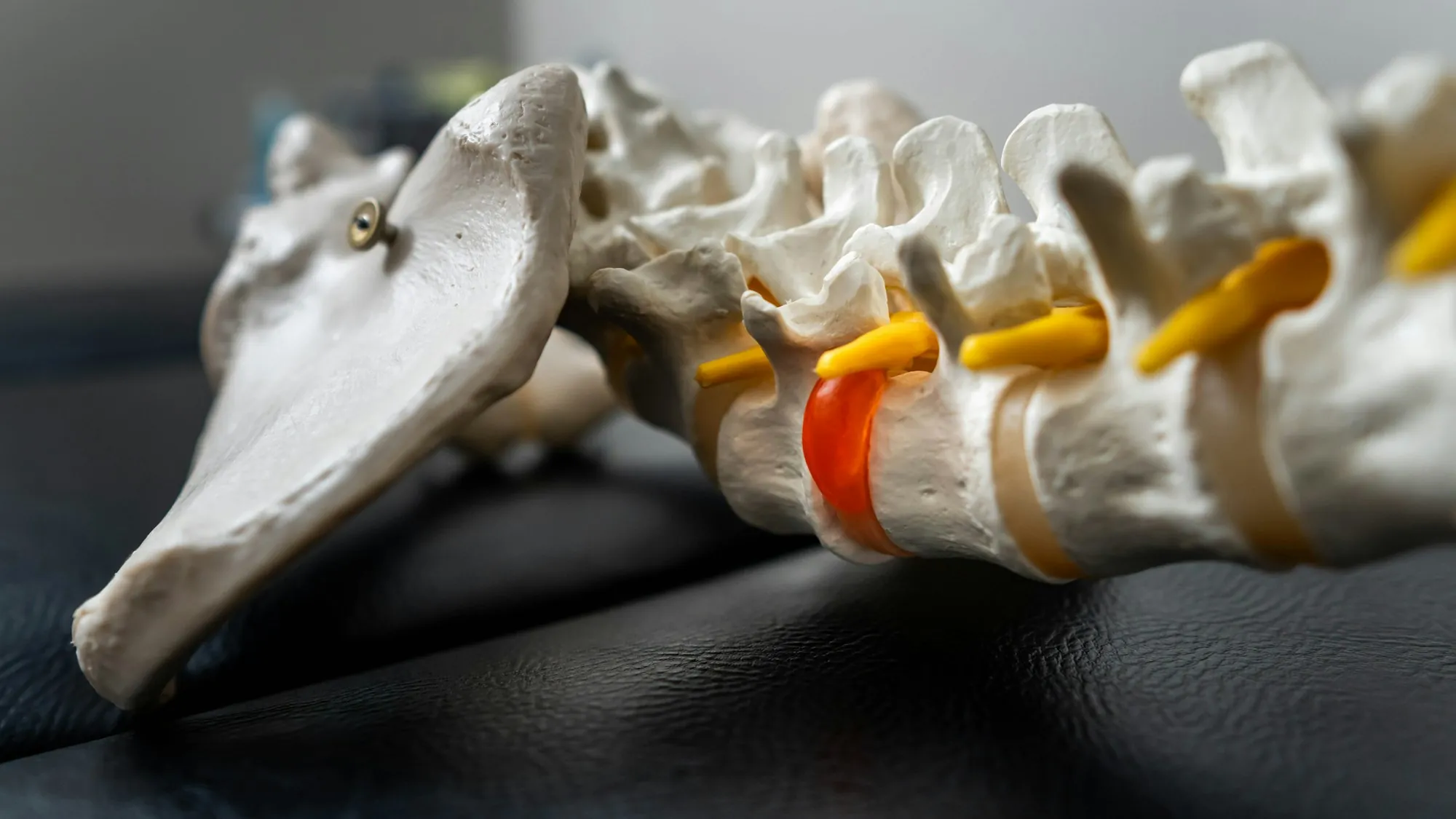
As we get older, the discs between the vertebrae gradually lose water and become thinner and less flexible. These changes are called disc degeneration. Despite the name, degenerative disc disease is not really a disease; it is a normal part of ageing.
Disc changes are very common on scans, including in many people who have no pain at all. For this reason, scan findings alone do not explain someone's pain.
In some people, worn discs are linked to back or neck pain, or lead to other problems such as a herniated disc or narrowing of the spinal canal. Most people are treated without surgery.
02
Warnzeichen: Holen Sie sofort Hilfe
Manche Symptome erfordern dringend ärztliche Hilfe. Warten Sie nicht auf einen Termin, wenn eines davon bei Ihnen auftritt.
- Numbness or tingling around your bottom, genitals or inner thighsCall 999 or go to A&E.
- New difficulty passing urine, or loss of control of your bladder or bowelsCall 999 or go to A&E.
- Weakness or numbness in both legs, or weakness that is getting worseCall 999 or go to A&E.
- With neck problemsNew clumsy hands, difficulty walking or loss of balance: get urgent medical help.
Notfall999Rufen Sie im Vereinigten Königreich bei jedem Anzeichen, das eine Notfallversorgung erfordert, sofort die 999 an oder gehen Sie direkt in die Notaufnahme (A&E).
In Europa112Rufen Sie in Europa die 112 an oder suchen Sie die nächste Notaufnahme auf.
Kein Notfall111Für dringenden Rat, wenn kein Notfall vorliegt, rufen Sie NHS 111 oder Ihren Hausarzt an.
03
Symptome
Die Symptome sind von Mensch zu Mensch verschieden. Häufige Symptome sind:
- 01Back or neck pain, which may come and go
- 02Stiffness
- 03Pain that is worse with sitting, bending or lifting
- 04Pain spreading to the buttocks, legs or arms, if nerves are affected
- 05Many people have no symptoms
04
Ursachen
- Natural ageing of the discs
- Genetics, which play an important part
- Previous injury
- Smoking
- Heavy physical work and being overweight, which may contribute
05
Diagnose
Diagnosis is based on your symptoms, an examination and, where helpful, scans. Because disc changes are so common, the important question is whether they explain your symptoms. This is judged by looking at your symptoms and scans together.
Mögliche Untersuchungen
- Medical history and physical examination
- MRI scan, where needed
- X-rays, sometimes, including standing or bending views
- CT scan, in some cases
06
Behandlungsmöglichkeiten
Nicht jeder braucht eine Operation. Nicht-operative Möglichkeiten wie Physiotherapie, Medikamente und Injektionen werden, wo angemessen, immer zuerst in Betracht gezogen.
07
Genesung
Symptoms often come and go. Many people find that pain settles over time, and regular exercise helps them stay active and manage flare-ups.
Wann Sie Hilfe suchen sollten
See your GP or a physiotherapist if pain is affecting daily life or not improving. Seek urgent help for any of the warning signs on this page. A specialist spinal opinion may help if you have nerve symptoms or have been told your scan shows disc degeneration and want to understand what it means.
Die Informationen auf dieser Website dienen der allgemeinen Orientierung und ersetzen keine Konsultation bei qualifiziertem medizinischem Fachpersonal. Medizinischer Haftungsausschluss
Klinische Prüfung ausstehend