
Questa pagina non è ancora stata tradotta, quindi il contenuto è mostrato in inglese.
01
Panoramica
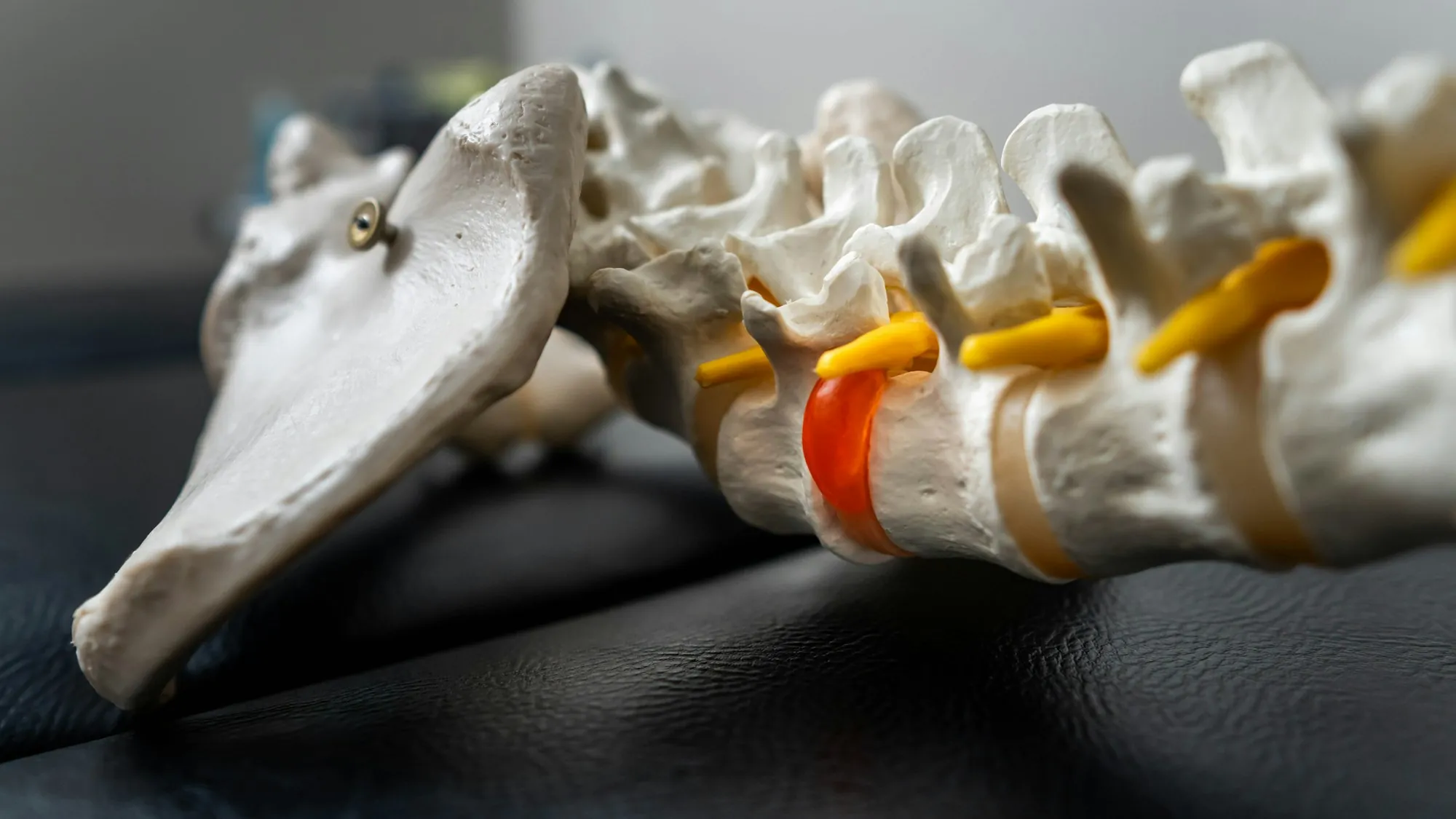
Spinal fusion joins two or more vertebrae (the bones of the spine) so that they no longer move against each other. Screws, rods and sometimes spacers called cages hold the bones in place while new bone grows between them.
Fusion is used when movement between vertebrae is causing problems, for example when the spine is unstable, when one vertebra has slipped forward on another, or when a deformity needs correcting. It is often combined with an operation to take pressure off the nerves.
Fusion is not usually recommended for general back pain without a clear, specific cause. UK guidance (NICE) advises against fusion for non-specific low back pain outside research studies. Whether fusion is right for you depends on the exact cause of your symptoms.
02
A chi può essere utile
- People with spinal instability, including some types of spondylolisthesis (a slipped vertebra)
- People who need nerve decompression where removing bone could make the spine unstable
- People with spinal deformity, such as degenerative scoliosis
- People with some fractures, tumours or infections of the spine
- Some people with neck problems who need a disc removed from the front of the neck
03
Come si svolge
You have a general anaesthetic.
The spine is reached from the back, front or side, depending on which levels are treated.
Any pressure on the nerves is relieved.
The disc between the vertebrae may be removed and replaced with a cage.
Screws and rods, or a plate in the neck, are fixed to the vertebrae to hold them still.
Bone graft or bone substitute is placed to help the vertebrae grow together.
The wound is closed. Over the following months, the bones gradually fuse.
04
Possibili benefici
- 01May reduce pain caused by abnormal movement between vertebrae
- 02Stabilises the spine and may protect the nerves
- 03Can hold the spine in a better position when a deformity is corrected
- 04May allow a fuller decompression of the nerves
05
Rischi
General risks of spinal fusion include:
- Infection
- Bleeding
- Blood clots
- Nerve damage, causing numbness, weakness or pain
- A leak of spinal fluid
- The bones not fusing (non-union), which may need further surgery
- Screws or rods moving, loosening or breaking
- Extra strain and wear on the levels above and below the fusion over time (adjacent segment disease)
- Some loss of movement at the fused levels
- Symptoms not improving as hoped
Smoking, poor bone strength and some health conditions can increase some of these risks. Your individual risks will be discussed in detail at your consultation.
06
Alternative
- Non-surgical care such as physiotherapy, exercise programmes and pain management
- Decompression surgery without fusion, where the spine is stable enough
- Injections for some types of pain
- Bracing in some situations
- In the neck, disc replacement may be an option for some people instead of fusion
07
Recupero
Fusion takes time to heal. You will usually be up and walking within a day or two, but the bones often take 6 to 12 months to fuse fully.
- In hospital
Usually 2 to 5 days, depending on how many levels are fused.
- First 6 weeks
Regular walking is usually encouraged; heavy lifting, bending and twisting are avoided.
- 6 weeks to 3 months
Physiotherapy and a gradual return to work and normal activities are common.
- 6 to 12 months
The fusion usually becomes solid during this time. X-rays or scans may be used to check progress.
Si tratta di tempi indicativi, non di promesse. Il Suo piano di recupero personale sarà discusso con Lei.
08
Domande da porre
Può esserLe utile portare alla visita domande come queste:
- Why do I need a fusion rather than decompression alone?
- How many levels would be fused, and how might this affect my movement?
- What is my risk of the bones not fusing?
- How can I improve my chances of a good fusion, for example by stopping smoking?
- When can I return to work, driving and sport?
Le informazioni presenti su questo sito hanno carattere generale e non sostituiscono una visita con un professionista sanitario qualificato. Avvertenza medica
Revisione clinica in attesa
