
01
Overview
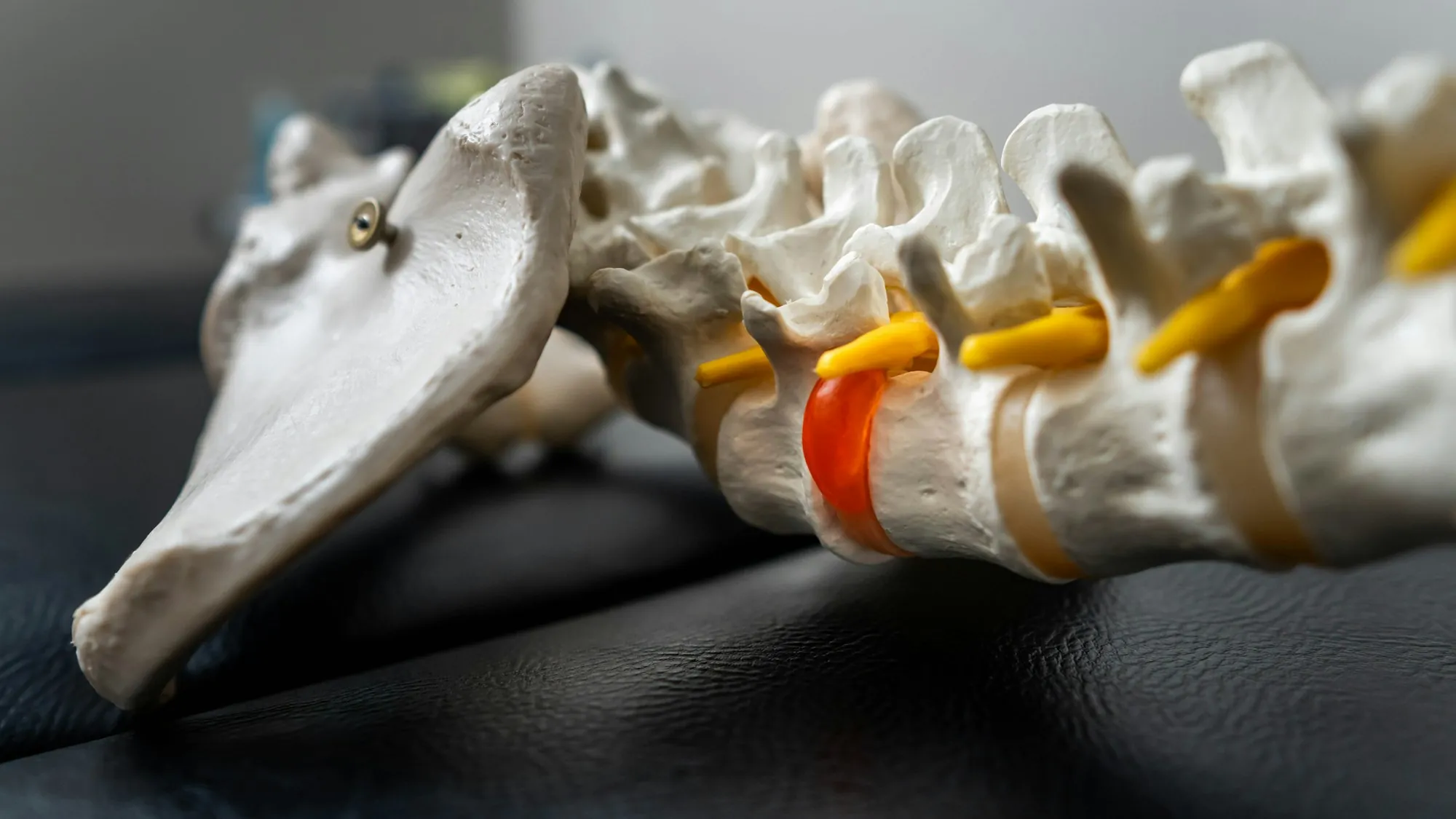
The discs between the vertebrae act as cushions. Each disc has a tough outer layer and a soft, jelly-like centre. A herniated disc, often called a slipped or prolapsed disc, happens when some of the soft centre pushes out through a weak point in the outer layer.
A herniated disc does not always cause symptoms. When it presses on or irritates a nerve, it can cause pain, numbness or weakness in the leg (sciatica) or, in the neck, in the arm.
Many herniated discs improve without surgery as the body gradually reabsorbs the disc material and the inflammation settles. Many people feel better within about 6 weeks, although it can take longer.
02
Warning signs: get help now
Some symptoms need urgent medical attention. Do not wait for an appointment if you have any of these.
- Numbness or tingling around your bottom, genitals or inner thighsCall 999 or go to A&E.
- New difficulty passing urine, or loss of control of your bladder or bowelsCall 999 or go to A&E.
- Sciatica in both legs, or numbness or weakness in both legsCall 999 or go to A&E.
- Leg or arm weakness that is severe or getting worse quickly, such as foot dropGet urgent medical help the same day.
- With a neck discNew clumsiness of the hands, difficulty walking or loss of balance: get urgent medical help.
Emergency999In the UK, call 999 or go to A&E straight away for any sign that needs emergency care.
In Europe112In Europe, call 112 or go to the nearest emergency department.
Not an emergency111For urgent advice that is not an emergency, call NHS 111 or your GP.
03
Symptoms
Symptoms vary from person to person. Common symptoms include:
- 01Back or neck pain
- 02Pain spreading down the leg or into the arm, which is often worse than the back or neck pain
- 03Tingling or numbness in the leg, foot, arm or hand
- 04Weakness in some muscles
- 05Pain that is worse with coughing, sneezing or sitting
04
Causes
- Age-related changes that make discs less flexible
- Lifting, bending or twisting, although many herniations happen without a clear cause
- Heavy physical work
- Smoking and being overweight, which may increase the risk
- Family history in some people
05
Diagnosis
A herniated disc is often suspected from your symptoms and an examination of your nerves. An MRI scan can confirm it and show which nerve is affected, and is usually recommended if symptoms are severe, are not improving, or if surgery is being considered.
Tests that may be used
- Medical history and examination of strength, sensation and reflexes
- MRI scan
- CT scan, if MRI is not possible
- Nerve conduction studies, occasionally
06
Treatment options
Not everyone needs surgery. Non-surgical options such as physiotherapy, medication and injections are always considered first where appropriate.
07
Recovery
Many people improve within about 6 weeks without surgery, although some symptoms, such as numbness, can take longer to settle. After a discectomy, leg pain often improves quickly, and many people return to light activities within a few weeks. A disc can herniate again in some people.
When to seek help
See your GP if pain is severe, is not improving after a few weeks, or if you have numbness or weakness. Seek urgent help for any of the warning signs on this page. A specialist opinion can help if symptoms are not improving or are getting worse.
The information on this website is general guidance and does not replace a consultation with a qualified clinician. Medical disclaimer
Clinical review pending